Fell-running and racing, as everything we do, has an impact on the environment. We all need to consider our role in the climate emergency and think about how we can mitigate our impact on the immediate and global environment, as individuals and as a club. CVFR committee takes these responsibilities very seriously and work has been ongoing to address these issues:
- We have co-opted a member to the committee to lead on environment & sustainability.
- We have moved to a website host that only uses renewable energy.
- We have moved 50% of committee meetings to zoom and 50% are scheduled after club runs to reduce the need for additional transport.
- Public transport options are publicised on fellrunner.org, SI entries and our own website and social media about our races, where relevant, and lift-share is encouraged. Facebook events are posted for all club champ races and other club events to encourage lift sharing.
- We expect runners to bring their own safety pins for our races and to bring their own water containers for races and for water at the end of races. Where we provide cups they are reusable, or paper ones that can be recycled.
- When food is provided after our races and for club events, we try to source from local suppliers and always provide vegetarian/vegan options.
- The club ‘do’ has taken place in the valley at public transport hubs since 2018.
- Our club vests have been made from recycled plastics since 2022.
- A minibus was organised to transport runners to a club champs race last year In the Lake District.
- We donated £600 each to CROWS and Slow the Flow in 2024 to mitigate our physical impact on the fells and paths.
Most of us run because we love the environment we live in. By sharing our joy and love of the landscapes, we naturally support the wider issue of winning hearts and minds to protect the natural environment. Nature-connectedness supports sustainable thinking. Below are some suggestions about how we can all enjoy our connection with the natural world through running, and play our part in reducing our negative impacts on the environment and climate change. Let’s make fell-running part of the solution!
Travel to races and events
The most significant impact of fell-running and racing in terms of climate change and pollution is emissions from transport to runs and races. Do you really need to use the car to get there?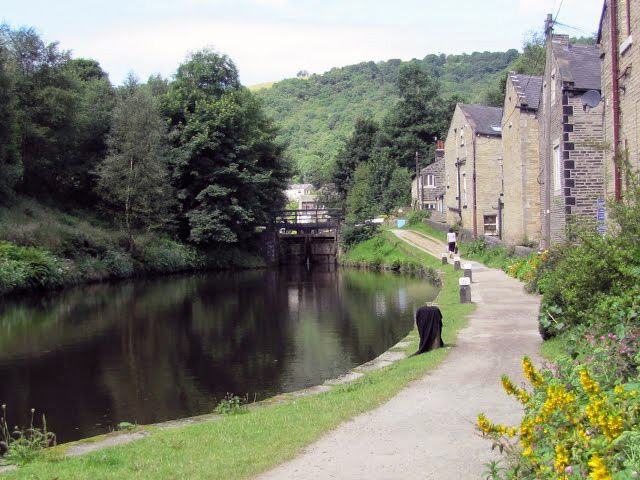
Club runs from Mytholmroyd are easily accessed by bike along the Canal towpath and by public transport. Walking, running or cycling to club runs generates least pollution; otherwise, could you use public transport? Or make friends with runners who live near you and share lifts? The same applies to races. Most races provide information about public transport options, and some offer incentives for arriving without a car or for filling the car you travel in. If you don’t know of anyone to share a lift with, there is a website racelifts.org that may help.
We are hoping to be able to offer minibus transport for some of the more distant English/British champs races and relays – look out for information on Facebook. If you would be prepared to drive a minibus to one of these, please let a member of the committee know.
Running kit
About 25% of our climate-changing emissions are due to what we buy – the manufacturing processes, the materials, and the disposal when we’ve finished with them.
In terms of our running kit – how many pairs of shoes do you have? Do you really need to buy another pair, or could you repair the ones you’ve got and love? 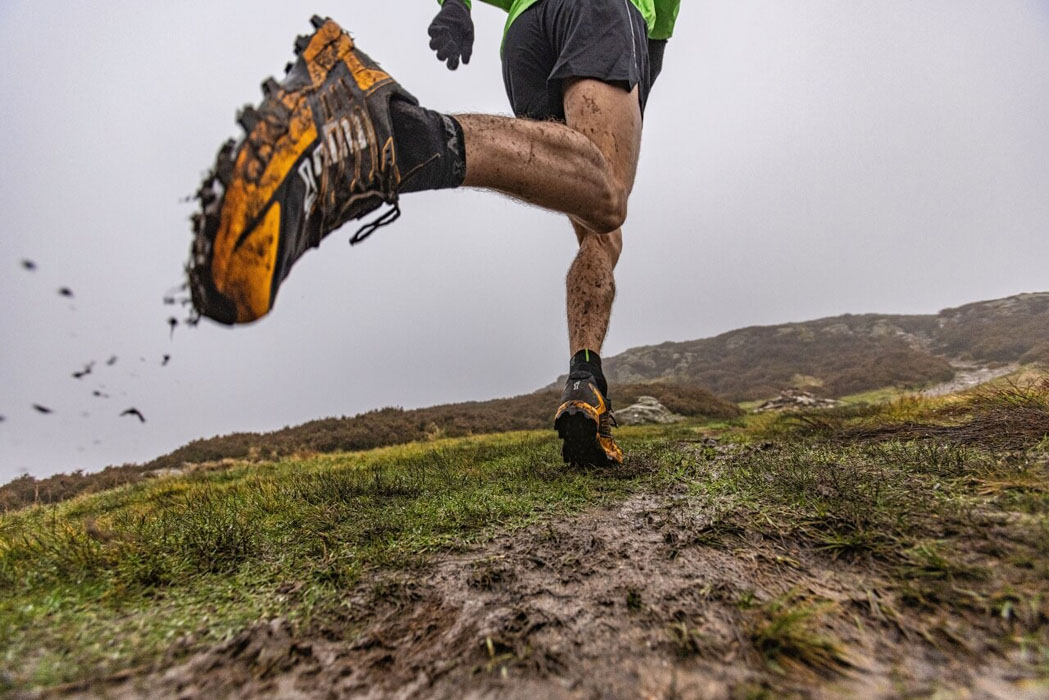
Fell shoes can last for many more miles than manufacturers recommend, and almost all end their life in landfill. Leaving them muddy and damp from one run to the next will allow microbes to rot the uppers. It’s best to wash mud off after each run with a tap or hose (not in the washing machine), and leave them to dry thoroughly with insoles removed.

Repaired uppers on these fell shoes
Do your uppers or soles wear out first? Fell shoes can be resoled. Club members have used both of the options below and are satisfied with the results.
Uppers can be repaired with KT tape and flexible glue (eg pairups.co.uk). The club has a repair kit you can use so please contact the Kit Officer.
Torn vests and holed leggings can be repaired with a needle and thread – if you need help, there will be someone at the local Repair Cafe with the skills you need (monthly in Mytholmroyd and elsewhere in the Valley – find it on Facebook). More technical equipment can be sent off for repairs – try this link for rab equipment or this link for Alpkit, or visit Alpkit in Ilkley to discuss the problem. Inov-8 have a repair scheme for their clothing products if you take them into a store. Follow this link to Inov8.
Leaky jackets can be re-proofed by machine washing in Tech Wash or equivalent.
If you’re tired of your useable kit or it doesn’t fit, you could advertise it on a CVFR WhatsApp group or on the website, or look out for one of our seasonal gear-swap events, or sell it on eBay or Outdoor Gear Exchange on Facebook, or donate it to an organisation that can re-use sports kit (jogonagain, kitsquad, sharewearclothingscheme). Or donate it to a local charity shop.
If you really need to get rid of it, try to avoid putting it into the bin for landfill or incineration. Many outdoor shops now have bins for clean used gear. Inov-8 will give you 20% discount on full-price gear if you take any unwanted Inov-8 gear that’s clean and dry, in any condition, to a store. (Inov8)
And finally – if you are buying new – try to check the sustainability credentials of the company and support those who are taking the issue more seriously.
Direct physical impact of running
Our feet have an impact on the fells: try to keep to existing footpaths and trods over moorland so you don’t create more drainage channels in the carbon-rich waterlogged peat, or disturb ground-nesting birds. We should resist the temptation to widen paths – run through the puddles instead! If you run with your dog, please keep them under close control on moorland to avoid flushing ground-nesting birds out of hiding in the heather.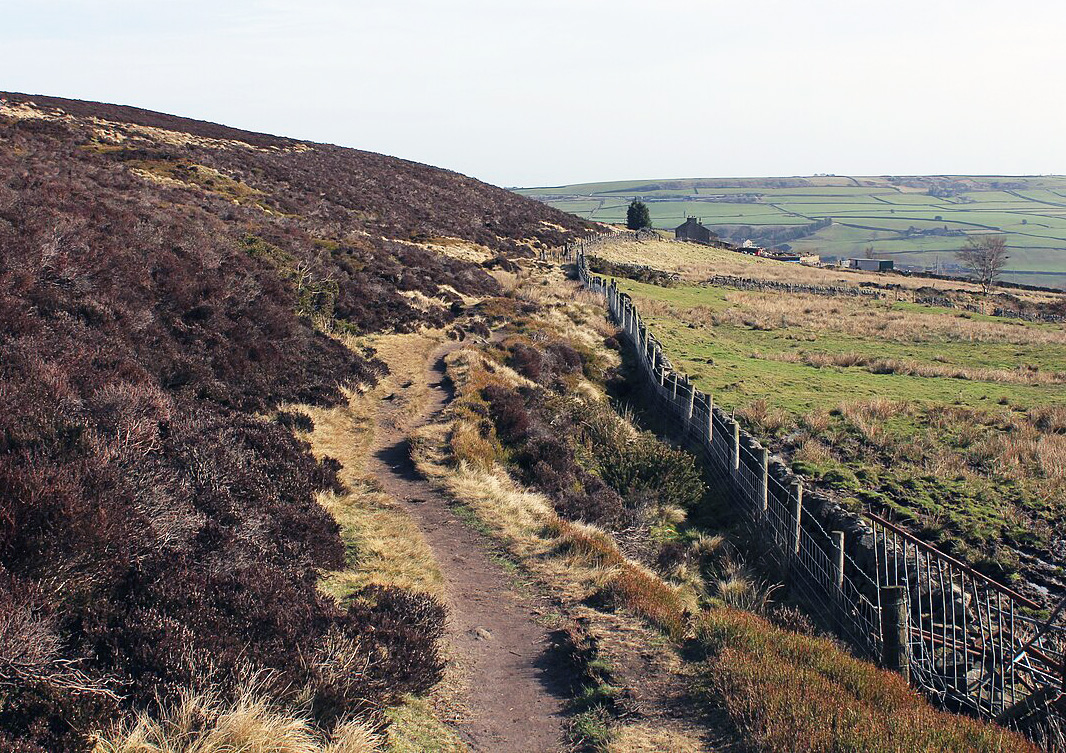
CROWS and Slow the Flow are two local organisations who sometimes need volunteers to help manage and restore paths and moorland. We will try to publish opportunities on Facebook, but following their Facebook pages will be the best way to find out.